
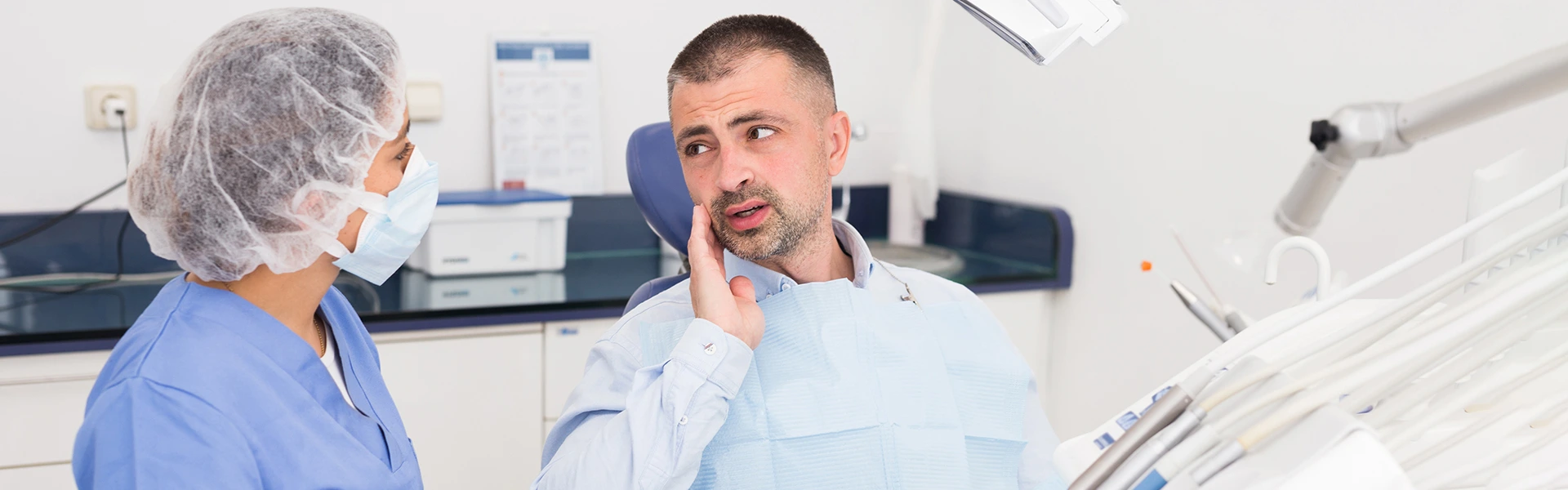
Emergency Dental Care in Modesto: What to Do About a Broken Tooth
You might hear a crack while chewing and realize that part of your tooth has broken away. Sometimes, the injury causes immediate pain. Other times, you notice only a rough edge or sensitivity to cold.
If you need urgent dental care in Modesto, an examination can help determine how seriously the tooth is damaged. Even a small fracture can extend beneath the enamel, where it’s harder to see.
Knowing how to protect the injured tooth and recognize warning signs can help you decide how quickly to seek treatment.
Is a Broken Tooth a Dental Emergency?
Urgency depends on the fracture size, your symptoms, and whether the tooth remains stable.
A minor enamel chip without pain may not require same-day treatment. However, a deeper break can expose dentin or pulp tissue, causing sensitivity, bleeding, or significant discomfort.
Signs of a broken tooth emergency include:
- Severe or persistent tooth pain
- A large piece breaking away
- Visible pink or red tissue inside the tooth
- Bleeding that continues despite gentle pressure
- A loose or displaced tooth following an injury
- Swelling around the affected area
Your dentist can determine whether the fracture involves the chewing surface, pulp, or root. This assessment helps establish whether the tooth can be repaired.
What Should You Do Immediately After Breaking a Tooth?
A few precautions can protect the injured area until you receive professional care.
- Rinse gently. Use lukewarm water to remove food particles and debris.
- Save broken fragments. Keep any recovered pieces in milk or saline. Some fragments may be suitable for reattachment.
- Control bleeding. Apply light pressure with clean gauze if the surrounding gum is injured.
- Reduce swelling. Place a cold compress against the affected side of your face for 10 to 15 minutes, then remove it to give your skin a break.
- Avoid further pressure. Chew on the opposite side, and avoid hard or sticky foods.
If needed, an over-the-counter pain reliever may provide temporary relief when used as directed and based on your medical circumstances.
Do not place aspirin directly against your gums, attempt to smooth the fracture with tools, or use household glue to attach broken pieces.
These precautions are temporary and cannot repair the injury.
When Should You See an Emergency Dentist for a Broken Tooth?
If a substantial portion of your tooth has fractured, you notice exposed inner tissue, or biting causes intense pain, contact an emergency dentist in Modesto, CA, promptly.
A small chip without pain or sensitivity may be less urgent. Call the dental office to explain what happened and ask when to schedule an examination.
Seek immediate attention if a permanent tooth becomes displaced after an accident or if you experience significant trauma involving your mouth or jaw.
Facial swelling with fever, spreading infection, or bleeding that will not stop requires urgent evaluation. Difficulty breathing or swallowing is a medical emergency.
Timely diagnosis matters, especially when a crack extends beneath the gumline or involves the tooth’s nerve.
What Happens If You Leave a Broken Tooth Untreated?
Once part of a tooth breaks away, the missing portion cannot grow back.
A superficial chip may remain stable, but a deeper fracture can weaken the tooth and expose sensitive areas.
Possible consequences include:
- Increasing sensitivity: Exposed dentin may react to cold drinks or sweet foods.
- Further breakage: A weakened cusp can fracture during normal chewing.
- Pulp damage: Deep cracks may irritate or injure the tissue inside the tooth.
- Tooth decay: Rough surfaces can trap plaque and become difficult to clean.
- Tooth loss: Fractures that extend into the root may leave too little healthy structure to repair.
The risk depends on the fracture’s depth, location, and the remaining strength of the tooth. Early assessment may allow less extensive treatment in suitable cases.
Can a Broken Tooth Become Infected?
Yes. A deep fracture can create a pathway for bacteria to reach the pulp, where nerves and blood vessels are located.
Infection within the tooth may eventually reach the tissues around its root, where a dental abscess can form.
Warning signs can include:
- Persistent or throbbing toothache
- Pain when biting
- Swollen or tender gums
- Pus drainage or an unpleasant taste
- Fever or increasing facial tenderness
An infected tooth does not always hurt continuously. Symptoms can sometimes decrease even though the underlying problem remains.
Treatment generally involves addressing the infection’s source through root canal therapy, drainage, or extraction when necessary. Antibiotics may be appropriate in selected circumstances, particularly with systemic involvement, but they do not replace necessary dental treatment.
How Does an Emergency Dentist Treat a Broken Tooth?
The appropriate repair depends on how much healthy structure remains and whether the pulp or root is affected.
During the exam, your dentist checks the fracture, bite alignment, and the tooth’s stability. X-rays may help assess the roots and surrounding bone, although some cracks require additional clinical testing.
Common Treatment Options
| Dental Condition | Possible Treatment |
|---|---|
| Small Enamel Chip | Smoothing rough edges or composite bonding |
| Moderate Fracture | Tooth-colored filling or dental bonding |
| Extensive Tooth Damage | Dental crown if sufficient healthy tooth structure remains |
| Irreversible Pulp Inflammation or Infection | Root canal treatment if the tooth can be restored |
| Deep, Non-Restorable Fracture | Tooth extraction when the tooth cannot be predictably saved |
For certain injuries, a temporary covering may protect the tooth until definitive treatment can be completed.
A dentist in Modesto, CA, can explain which approach is appropriate based on the examination findings. Not every fractured tooth can be saved, but several repair options may be available.
Conclusion
Not every broken tooth has the same level of damage. Some have minor surface chips, while others develop cracks that extend into deeper structures. Protect the area and schedule a timely examination to reduce the risk of further complications.
If your tooth has fractured or become painful, Sylvania Dental – Modesto offers emergency examinations and restorative care. Contact the office to discuss your symptoms and request an appropriate appointment.
Frequently Asked Questions
It can be. Severe pain, significant fractures, bleeding, swelling, or exposed pulp require prompt attention. Small chips without symptoms may be assessed during a routine appointment.
Sometimes. A crown or root canal treatment may preserve a severely damaged tooth if enough healthy structure remains. Certain deep fractures require extraction.
The damaged area may become sensitive, fracture further, or develop decay or infection. The likelihood of complications depends on the injury’s severity.
Many fractured teeth are repairable. The outcome depends on the crack’s location, how much enamel and dentin remain, and whether the pulp or root is involved.
Eat gentle, easy-to-chew meals like soft eggs, smooth yogurt, mashed vegetables, or soup served at a comfortable temperature. Avoid chewing on the injured side until your dentist has evaluated the tooth.